Monday, 5 March 2018

World Record Transfers - Post WW2 to 1968

1949
England Johnny Morris, Manchester United to Derby County
£24,000
Today's price (adjusted for inflation) - £780k

Fresh from the victory of WW2, Britain also took back its world record for a football transfer from Argentina's River Plate. This transfer marks the only time that Man Utd sold a player for a record fee, and their purchase of Paul Pogba in 2016 is the only time they broke the record for a signing. Derby County had won the first FA Cup after the war in 1946, and used that cachet to land United's inside-forward. Morris managed 44 goals in 130 appearances for County before moving on to Leicester.

1949
England Eddie Quigley, Sheffield Wednesday to Preston North End
£26,500
Today - £860k

Post-war euphoria was high, as was the transfer fees in Britain, with 1949 seeing the record broken twice. Eddie Quigley joined a Preston side that featured the great Bill Shankly. Preston were the winners of the first two league championships ever in 1889 and 1890, but couldn't quite match that feat with their new world record signing as they finished runners-up in 52/53.

Trevor Ford (1959).jpg1950
Wales Trevor Ford, Aston Villa to Sunderland
£30,000
Today - £940k

Sunderland broke the world transfer record for the third and last time to sign Welsh striker TrevorFord. He was the first of two Welshmen to hold the record, with Gareth Bale's 2013 move to Madrid making up the other one. Sunderland were one of the big-hitters in pre-war English football, having won the league title 6 times, but their big spending couldn't help them to a post-war title. Ford netted 67 times in 108 appearanes before moving back home to Cardiff in 1953.


1951
England Jackie Sewell, Notts County to Sheffield Wednesday
£34,500
Today - £995k

Having sold Eddie Quigley in 1949 for a record fee, Sheff Wed decided to re-invest the cash on a record transfer of their own. In came forward Jackie Sewell from Notts County. Jackie's 87 goals in 164 appearances wasn't enough to rouse Wednesday, who haven't won a major honour since 1935.

Image result for hasse jeppson napoli1952
Sweden Hasse Jeppson, Atalanta to Napoli
£52,000
Today - £1.37m

Up until now its been all Britain, with only one Argentine exception. But Hans Jeppson's £52k move to Napoli began a period of almost total transfer domination for Italian football that lasted into the millenium. Forget Zlatan, Hasse Jeppson is the only Swedish player to hold the record transfer. Jeppson had moved from Djurgarden in Sweden to England initially, where he joined Charlton Athletic. After a short stay of 9 goals in 11 games, he moved to Italy, first with Atalanta and then the record transfer to Napoli. The Napolese side will feature again in this list twice more, so look forward to that with baited breath. Jeppson is pictured (right) just before his death in 2013.

Image result for juan alberto schiaffino1954
Uruguay Juan Schiaffino, Penarol to AC Milan
£72,000
Today - £1.8m

Schiaffino became the second South-American to hold the record and the first and only Uruguayan. This transfer saw the first time that a European side broke the world record to sign a player from a South-American club, something we will see a few more times in this list. Perhaps the growing popularity of the World Cup was showing just how good the South-Americans were, or perhaps improved air travel was allowing European clubs the chance to scout on foreign lands. Schiaffino helped AC Milan to dominate Italian football in the late 50s, during his stay they won Serie A three times.

1957

EnriqueSivori 1956.jpegArgentina Enrique Omar Sivori, River Plate to Juventus
£93,000
Today - £2.05m

I must admit that Sivori is the first name in the list that I recognise, and even so its a faint recognition.  Another to move from South America to Italy, this time to Turin-giants Juventus. Sivori became the second Argentine to break the world record after Bernabe Ferreyra in 1932. Only two Argentines have held the record since, the might Diego Maradona and the not-so-mighty-but-still-very-good Hernan Crespo. Sivori is a bonafide legend at Juventus, having scored 135 goals in 215 appearances and winning 3 Serie A titles and 3 Coppa Italias.

Image result for luis suarez inter1961
Spain Luis Suarez, Barcelona to Internazionale
£152,000
Today - £3.1m

Here's another familiar name, but it's not Barcelona's current Uruguayan maestro. Nicknamed 'El Arcitecto', the original Luis Suarez is considered one of Spain's greatest ever players, and won the Ballon d'Or in 1960. More of an attacking midfielder than an out-and-out striker, he was famed for his perceptive passing and explosive shot. Suarez's move to Inter helped them to become a dominant force in Italy and Europe in the 1960s. During Suarez's years of 1961 to 1970, Inter won the Serie A 3 times,and the European Cup twice.


1963
Italy Angelo Sormani, Mantova to Roma
Image result for angelo sormani roma£250'000
Today - £4.8m

With Italian football dominating the world transfer record at this time, it is surprising that Sormani became the first Italian player to become the record transfer. Sormani was, however, born in Brazil and began his career at Santos but went on to represent Italy. In attempt to compete with the stunning teams in Milan at the time, Roma splashed out a quarter of a million pounds to land Sormani, as well as agreeing to send 3 players to Mantova as part of the deal. The transfer was a failure though, with Sormani scoring just 6 times in his one season at the club, he moved to Sampdoria the following year. Sormani would later join AC Milan, where he won many many trophies. Angelo Sormani is the first player on the list who is still alive today, he is 78 years old.
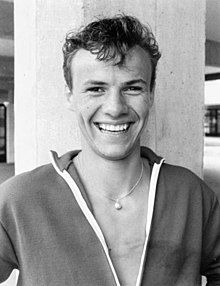
Harald Nielsen (football)5.jpg1967
Denmark Harald Nielsen, Bologna to Internazionale
£300'000
Today - £5m

Nielsen became the first and only Danish player to hold the record after impressing at Bologna as a forward with 81 goals in 157 appearances. Inter were arguably the best team in the world in the 1960s and Nielsen unfortunately didn't make the grade, scoring only twice in 8 games before moving on to Napoli. A back injury kept him on the sidelines and ultimately forced him to retire in 1970, aged 29. Harald is still alive and well and was instrumental in the professionalisation of the Danish game after his early retirement.


Pietro Anastasi - Juventus FC 1971-72.jpg1968
Italy Pietro Anastasi, Varese to Juventus
£500'000
Today - £7.95m

The first half-a-million-pound player, Anastasi became the second Italian record-breaking signing. His huge fee is made even larger when considering the fact he was only 20 when Juventus signed him. Anastasi had a decent career at Juventus, where he scored 78 times in 205 appearances. During that time Juve won the Serie A 3 times.


That wraps up from WW2 to 1968. This period saw a shift from the footballing financial dominance of Britain over to Italy, a dominance that will continue in my next post. Join me next time as I go through the record transfers from 1973-1986. You'll need to bring your space hoppers and Wham records with you.


Sunday, 4 March 2018

World Record Transfers - Pre WW2

The Early Years
Pre WW2

1893
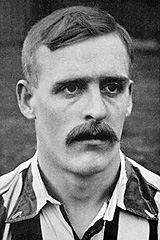
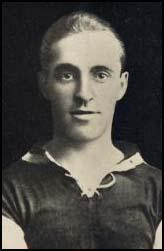
Scotland Willie Groves, West Brom to Aston Villa
£100
Today's Price (Adjusted for Inflation) - £10k

Let's start at the beginning. Before the Willie Groves transfer, records are sketchy at best. Players were certainly transferred between clubs, but often as trades for other players or sometimes for services and goods. Groves' transfer between the Black Country rivals is known as being the first transfer to ever exceed £100. As with most world transfer record-holders, Willie Groves was a striker, born in Glasgow and came through the ranks at Hibs. What is interesting about this transfer is that Aston Villa were actually forced to pay West Brom the £100 fee after they were found guilty of poaching Groves and another player, Jack Reynolds, from WBA. The two helped the Villains to the 1984 league championship that season.

1903
England Ben Green, Barnsley to Small Heath.
£500 
Today - £49k

If you've never heard of Small Heath, don't worry, neither had I until researching this article. The Peaky Blinders fans amongst you might though, as Small Heath is where most of the TV show is set. Small Heath became known as Birmingham in 1905, and finally Birmingham City in 1943. It took a decade for Big Willie's £100 transfer to be broken, and along came another Midlands club to smash it, paying 5 times the amount for the inside forward. That 400% increase remains the highest percentage between record transfer fees to this day. 'Benny' is famous for scoring the club's first goal at their new ground St. Andrews, 3 days after it's official opening on 29 December, 1906. The club rewarded Benny with a piano for that goal. Class. Benny was tragically killed in action in France in the first world war, aged just 34.

1904
Scotland Andy McCombie, Sunderland to Newcastle United.
£700
Today - £69k

Up to the North-East we go. Two themes developing; transfers in this period tend to be between teams that are geographically close, and English clubs think Scottish players are worth breaking the transfer record for. Contrary to developing themes, though, is that McCombie was a right-back, making this the first world record breaking transfer for a non striker. McCombie won the football league championship with both Newcastle and Sunderland, as well as being an FA Cup runner-up whilst representing both sides.

1905
EnglandAlf Common, Sunderland to Middlesbrough
£1000
Alf Common.jpgToday - £98.5k

Sunderland were swimming in cash in the early 1900s, with their local rivals spending big money to pick apart the dominant Sunderland side that had won 4 league championships between 1892 and 1902. Forward Alf Common had previously moved from Sunderland to Sheffield United in 1901 for £325, but returned to Sunderland in 1904 for £520. Sunderland nearly doubled their money just one year on when a different North-East rival, Middlesbrough, became the first club in history to spend 4 figures on a player. It turned out to be a decent bit of business, as Common scored 58 goals in 168 appearances for Boro. 

1913
England Daniel Shea, West Ham to Blackburn Rovers
£2000
Today - £180k

London, being Britain's financial capital, is conspicuous in its absence from early football transfer records. Perhaps this points to the fact that football has its roots in working-clas areas like the North-East and the Midlands, which have featured in all transfers so far. Daniel Shea's move in 1913 is the first to feature a club from the nation's capital, but tellingly Shea left the bright lights of London for humble Lancashire. Shea was an excellent signing, and helped Blackburn win the 13/14 league championship in his first season. He scored 61 goals in 97 appearances for Rovers, but his spell was interrupted by the First World War and he returned to West Ham in 1920.

1914
England Percy Dawson, Hearts to Blackburn Rovers
£2500
Today - £220k

Dawson was signed during the 13/14 season in which Blackburn won the league championship. The club had shelled out £4500 for Daniel Shea and Percy Dawson to lead their title-winning attack. This was to be Blackburn's last league title until they won the Premier League in 1995, with another expensive but top quality strike-force in Alan Shearer and Chris Sutton. Dawson's transfer is noteworthy because it is the first world record fee to involve a club outside of England, in the shape of Edinburgh-based Heart of Midlothian. Hearts sold their star striker to fund much needed improvements to Tynecastle Stadium.

1920
England David Jack, Plymouth Argyle to Bolton Wanderers
£3500
Today - £129k

Born in Bolton, inside-forward David Jack began his career at Plymouth as a result of being stationed there during WW1. He moved to his hometown club in 1920 and famously became the first player to score at Wembley Stadium, during the 1923 FA Cup Final, which saw Bolton beat West Ham 2-0, with King George V in attendance. Jack scored an impressive 144 goals for Wanderers in 295 games, and his goals helped them win 2 FA Cups; the aforementioned '23 Cup, and again in 1926 where he scored the only goal against Man City.

Syd Puddfoot.jpg1922
England Syd Puddefoot, West Ham to Falkirk
£5000
Today - £250k

Falkirk became the first club outside of England to break the world record transfer for a player. Remember that, it might make you a pub-quiz hero one day. Falkirk had been Scottish league runner-up twice in the 1900s and in their push to become champions opted for the excellently-named Puddefoot, who had already scored over 100 goals for West Ham. Falkirk would ultimately not win a league title with Syd, and have still to this day never been Scottish champions. They are, however, the only Scottish team in history to break the world record fee for a footballer. This transfer is also the second time that West Ham to featured as the selling club, suggesting that West Ham have always had a world-class youth development system at the club.

1922
England Warney Cresswell, South Shields to Sunderland
£5500
Today - £275k

This one features another side who have since changed their name. South Shields changed their name in 1930 to Gateshead after relocating the club in the 1920s because of financial problems. Hard to imagine how they had such financial difficulty after they sold their full-back, Warney Cresswell, for a world-record fee. Similar to when Leeds sold Rio Ferdinand for £30m but still managed to descend into administration. This transfer strengthens the fact that the North-East really ruled football in the early 20th century. Cresswell played 182 times for Sunderland but never scored a goal. A 1920s version of Rob Jones.

1925
England Bob Kelly, Burnley to Sunderland
£6500
Today - £340k

In the 1900s, Sunderland were a selling team, but by the 1920s they were soending big. They broke their own world record to sign inside-forward Bob Kelly after he had scored 88 goals in 277 appearances for Burnley. Sunderland are one of only two teams in history to break their own world record to sign a player, with Real Madrid doing it much more recently (Another one for you pub-quiz aficionados). Sunderland's big spending didn't pay off, however, and they had to wait until 1935/36 to win the last of their 6 English league titles, with Cresswell and Kelly both long gone by then.

1928
England David Jack - Bolton to Arsenal
Image result for arsenal 1930s david jack£10'890
Today - £600k

Jack is back! Having held the world record in 1920 when he moved to Bolton, David Jack became thefirst player in history to hold it on two separate occasions. He is one of only three players in history to do so, with illustrious company in Diego Maradona and Original Ronaldo also doing the same. He was also the first ever player to go for 5 figures. This guy is just a pub-quiz dream, and he's got two first names. This transfer is also pub-quiz-worthy in that it is surprisingly the only time in history that a London-based club broke the world record. Arsenal would go on to win their first league championship in 1929/30 as well as the FA Cup the same year to complete the double. That sparked a period of dominance for the Gunners as they won the league again in '33, '34, '35, and '38. David Jack provided 113 goals in 181 appearances for Arsenal between 1928 and 1934. I think it's safe to say that this was one record transfer that paid off big-time.

1932
Bferreyra poster 1936.jpgArgentina Bernabe Ferreyra, Tigres to River Plate
£23'000
Today - £1.46m

The last time the record was broken before the outbreak of WW2 was done so by Argentine giantsRiver Plate. This transfer is the one and only time that a club outside of Europe broke the record. What a signing it was though, as Ferreyra scored 187 times in 185 appearances fro 1932 to 1939, and who knows how many more would have followed if old Adolf hadn't started to play silly buggers in '39.


That wraps it up for Pre-War, join me next time for post-war euphoria. Down with Adolf, up with the transfer value of association football players.

Record Transfers Through History

I created this football finances blog in 2010 for a university project. Back then, Cristiano Ronaldo's £80m move from Manchester United to Real Madrid was the most expensive transfer in world football history. Since then, the record has been broken 5 different times, and of course it was smashed by Neymar's eye-watering £198m move form Barca to PSG in the Summer of 2017.

So, to get back in the saddle, I'll be taking a look through the history of the list of most expensive transfers in football history. From the late 1800s all the way to present day. Come with me now on a journey through time and space.... and transfers.

Wednesday, 21 April 2010

He May Never Walk Alone, but Can New Liverpool Chairman Save the Day?


For those Liverpool fans that watched new Chairman Martin Broughton's slick inauguration speech last Friday with renewed optimism concerning their beloved club, it may be pertinent to question the new boy's claims.

As an adopted scouser myself, I feel the optimistic side of me pulling my heart strings to Mr Broughton's tune. My pessimistic rationale, however, worked overtime to scrutinise his attempts at adding vigour to this ailing club during his live broadcast for BBC Sport. (Which can be seen below)

His biggest claim for fan support was his insistence that current Liverpool owners Hicks and Gillett will at last sell up, to the euphoria of the vast majority of Reds fans, and that Mr Broughton will only seek to sell to the "right new owners".


This earnest statement seemed only to raise more questions than it answered. The "right new owners" for who? Broughton now heads a 5-man board at Anfield that includes Hicks and Gillett, but when the decision of selling is to be made, I doubt the "independent" chairman's influence.

Broughton insists that he will "make it very clear what the buyer needs to do from the point of view of the supporters", but what obligation do the American duo owe to the fans that have been so hostile?

Imagine a £400m offer arrives on Broughton's desk from a deep-pocketed life-long Liverpool fan who insists a new stadium will be up before the next solar eclipse and that Fernando Torres will have a new strike partner before David N'Gog has to return to his real day job. Meanwhile, Hicks' and Gillett's valuation of £600m+ is met by a consortium that will borrow against the established name of LFC and will issue promises to raise the cash for the stadium. Which one would be accepted, really?

Why should Hicks and Gillett take a £200m pay cut to enhance the lives of the fans that have effectively forced them out? I very much doubt Broughton's influence on the men when dollar signs can be seen on the horizon.

And lets not forget that Broughton comes to us as Chairman of a British Airways organisation that is notoriously unpopular with its workforce. Hope, however, lies with the fact that Broughton, as British American Tobacco Chairman, alienated himself from the tobacco industry by striking an internal blow , declaring: "I want never to see my own children smoke". Costing companies millions and disregarding his own name to potentially save lives, not bad.

Is he prepared to take this mutinous stance at Liverpool, and if so would Hicks and Gillett allow him to spoil their pay day?

Tuesday, 20 April 2010

Why American Soccer is Entering the Major Leagues


As the self-proclaimed inventors of football, us Brits tend to laugh at and deride our American cousins when it comes to 'soccer', but the creation and maintenance of their flagship franchise Major League Soccer should be a source of inspiration to us amongst our own financial peril.

USA was granted the 1994 FIFA World Cup under the agreement that they would establish a long-term professional league. A move that was no-doubt fueled by FIFA's willingness to open the soccer market up to the richest country on the planet, with previous attempts of fading superstars, like George Best who played for the San Jose Earthquakes in 1980, joining their amateur ranks at the end of their careers being largely fruitless.

MLS was the result and many see its success being owed to very strict controls on transfers and salaries since its inception in 1996. Focus was placed on home-grown talent, so much so that by the end of the first season of MLS, which was won by D.C. United, soccer had more registered native players than any other professional sport.

The 2010 season of the MLS began a month ago, and attendances are for the first time averaging above other American favourites NBA (basketball) and NHL (ice hockey), leaving soccer the 3rd most attended sport in the USA behind NFL (American football) and MLB (baseball). Basketball and hockey fans would eagerly point out the size limitations their stadiums impose on numbers but there is more to this shift than just physical boundaries and the David Beckham effect.

This shift can be best illustrated by the highest averaging team in the MLS, at 36,153 average last month, the Seattle Sounders. Following the relocation of their basketball team the Sonics to Oklahoma, a struggling Seahawks NFL side and their baseball team the Mariners becoming the first ever NFL team in history to have a $100m payroll and lose 100 games, it seems that Seattle's sporting fans are eager to back a winner, after they won last years US Open Cup.

USA's national soccer team has reached every World Cup Finals since 1990, even reaching the last 8 in Japan/Korea in 2002. And with their Confederations Cup Runners-up place last year adding to their strong bid to stage the 2018 World Cup finals; perhaps we will see the rest of the nation following Seattle's lead and the USA could become the footballing powerhouse that we have always hoped/feared.


Monday, 19 April 2010

A Quick Guide to England's Financially Stricken Clubs

As the 2009/10 term draws to a close, we can look back on a season that has been riddled with financial difficulties at all levels of English football. Here is a quick guide to how financial struggles have left the most pertinent clubs and how it all might have been so different:

Premiership

Portsmouth
Probably the most recognisable current case of club mismanagement that saw Pompey have a bittersweet season. Deducted 9 points for entering administration and facing relegation from England's top division as a consequence, the Avram Grant led side miraculously reached a second FA Cup final in 3 years. They now await a decision on whether they are to be granted a European Football License from governing body FIFA (which seems improbable) which would allow them to see Europa League football at Fratton Park whilst mounting a charge for promotion from the Championship next season.


Championship

Crystal Palace
The Londoners sit 2 points above the drop in the Championship having had 10 points deducted for their financial faults. Before entering administration the then Neil Warnock managed team were challenging for a playoff spot. Since, their experienced manager defected to cash-rich London rivals Queen's Park Rangers, with Paul Hart now taking the reins.


League One

Southampton
Like their fellow Southern rivals Portsmouth, the former Premiership
stalwarts have had increasingly worsening finances since their relegation from the top-flight in 2006, after 27 years in England's premier competition. They now lie in 8th place in England's third tier having had 10 points deducted for entering administration before this season began. Without the point penalty they would be at 6th in the league, pushing for automatic promotion with a playoff place guaranteed.


League Two

The only professional English division not to have a club enter administration this season, but has still seen one of the most controversial financial stories of the year. Notts County sit top of the league with 2 games to play thanks to their early season policy of attracting otherwise unfeasible targets with imagined riches and ungrounded promises (Just ask Sol Campbell). They will most probably pay the price perhaps by entering administration next season whilst in League One, having robbed a worthy club the chance of promotion this term. Without County's financial aberration you could move everyone around them one place up and offer Rotherham a duly earned promotion after their own financial turmoil that saw them deducted 17 points last year.

Blue Square Premier

Chester City
Thee Cheshire club have paid the ultimate price for their financial problems, having been expelled from the league for failing to attend fixtures and ultimately liquidating as a result. Chester now look to create a new football team for the city under the guidance of a group of dedicated supporters; City Fans United. Chester's affect on the league is that all results involving them have now been expunged, despite some protestation from aggrieved clubs who beat Chester, and one less club will be relegated.


Blue Square North/South

Farsley Celtic
 
Like Chester, the Yorkshire club are now defunct as a result of financial inadequacies with all their results in the league expunged. Farsley, who once boasted Micah Richards as a youth player on the books, dissolved in March this year owing £750,000 in unpaid taxes. Like the BSP one less club will be relegated from BSN as a result of Farsley's expulsion. The Southern section, however, remains conspicuous in its relative financial security with no clubs facing point deductions.